
"tree products"
20000 article(s) found

Flavor characteristics of La Minita Coffee beans in flagship Manor of Costa Rican Coffee Raminita Group
For the exchange of professional baristas, please follow the coffee workshop (Wechat official account cafe_style) SHB Raminita La Minita Raminita, Costa Rica is an international coffee export company, named after Hacienda La Minita Raminita Manor, the flagship estate in Tarazhu, Costa Rica. In addition to the flagship estate in Costa Rica, Raminita also offers coffee from various producing areas of the world

Introduction of Vietnamese Coffee varieties of Vietnamese Coffee trees introduction of fine coffee beans Robusta species
In recent years, India has also begun to plant coffee trees in Arabica and is more committed to coffee production, but there has been no development in the boutique coffee market. The Vietnamese coffee we often hear in our conversation sometimes refers to the cooking method of the ice drop kettle, which is different from the kinds of coffee beans mentioned here. Don't confuse them with robusta coffee beans with their unique aroma and bitterness.

Introduction to the Gedeo producing area of Yega, Ethiopia. How about the flavor of dried fruit coffee beans on the Yega Xuefei tree
Professional coffee knowledge exchange more coffee bean information please follow the coffee workshop (Wechat official account cafe_style) this is not just the introduction of a new product, with the debut of this coffee, we will officially explore the next generation of Ethiopian coffee with you. Among several trends in the development of Ethiopian boutique coffee, we had a relationship with large coffee in the cup test the year before last.

Coffee trees grow around the equator.
Coffee trees grow in tropical or subtropical agricultural gardens centered around the equator and called coffee belts. Most of the coffee production is between the Tropic of Cancer, 25 degrees north of the tropical or subtropical equator and 30 degrees south of the equator. An area with an annual average temperature of 16-25 degrees Celsius, no Frosts Descent and rainfall of 1600-2000 mm. At present, coffee is mainly produced by seven countries.

What is the difference between coffee and coffee beans
The Lieberica Coffee Tree is tall and strong, 18 meters high, with large and tough leaves, large fruits and coffee beans. Lieberica coffee is grown in Malaysia and West Africa, and its production is small because of its unique taste and low demand. At present, Arabica coffee accounts for about 70% of the world's total coffee production, but the proportion of Robbins coffee is increasing, mainly because of Robbins.

Coffee trees from flowering to fruiting
Following caf é (Wechat official account vdailycom) found that Beautiful Cafe opened a small shop of its own when you tasted the freshly brewed coffee with those roasted coffee beans in your hand. Have you ever wondered what it would be like for a coffee bean to go from a seed sprinkled on the soil to sunbathing on a coffee tree to becoming a ripe fruit without its mother?

What are the natural weather conditions and environment for growing coffee
Character identification: 1. The seed coat of small fruit coffee has been removed, oval or oval in shape, 8-10mm in length, 5-7mm in diameter, 3-4mm in the middle part of coffee tree, raised on the back, flat on the ventral surface, with slightly curved longitudinal groove and paper seed coat marks. Raw products are yellow or dark green; baked products are dark brown with special aroma and slightly bitter taste. Astringent. 2. The seeds of medium fruit coffee are slightly larger and ovoid.

Increasing tree planting in coffee plantations can increase the yield of coffee beans
Can you imagine planting some trees in your coffee garden, which may sound surprising, but studies have shown that planting a certain number of trees in your coffee garden can increase the number of birds and increase coffee production. Many coffee plantation owners know that one of the main risks of coffee is the coffee bark beetle, an insect that drills into the coffee beans and puts the eggs

Tea tree essential oil aroma of lemon tree estate coffee flavor taste characteristics of the production area Variety introduction
Lemon Tree Estate is adjacent to La Gloria Limoncillo and is currently run by a pair of sisters, inherited from their father, Esteban McEwin. Since 1938, they have been growing coffee in the area, covering an area of about 200 hectares, of which about 100 hectares are planted.

Vietnamese Coffee newly popular Vietnamese Coffee
Coffee tree is a small evergreen tree of Rubiaceae. Coffee for daily consumption is made from coffee beans combined with various cooking utensils, and coffee beans refer to the nuts in the fruit of coffee trees, which are then baked in an appropriate way. The taste of a standard cup of coffee should not be bitter, and a qualified barista will strictly carry out every step when making coffee.

The whole process of coffee from picking to finished product-Yunnan coffee bean picking season
The whole process of coffee from picking to finished product-the Arabian coffee tree is usually a larger shrub during the Yunnan coffee picking season, with green, oval leaves and oval fruit, and generally has two flat seeds. If only one bean seed germinates, it's called pea-shaped coffee beans. The word Roberts comes from the most widely grown variety of Canifra coffee. Robbins is

Coffee knowledge Coffee tree coffee beans growth habits
Coffee is a drink that gives the public the impression of being black, bitter, sleepless, and excited. The coffee beans we see in coffee shops are dark brown and belong to roasted coffee beans, while the color of coffee liquid is amber. Coffee comes from coffee beans, which in turn are harvested and processed from the fruits of trees. Distribution of coffee: coffee trees

Which part of the world is the best place to grow coffee trees?
A survey by the Royal Botanical Gardens in London has found that climate change is having an impact on the coffee people depend on. Coffee trees will gradually die out with climate change, such as Arabica, the most popular coffee variety, which is likely to disappear by 2080. According to a survey by British scientists, it is only the wild coffee trees that are more likely to die out.

Can coffee trees be planted at home? let's first understand the whole process of coffee beans from planting to picking!
Professional coffee knowledge exchange more information about coffee beans Please follow the coffee workshop (Wechat official account cafe_style) what are the fruits and seeds of coffee? Do you want to plant coffee trees in your own home when the coffee beans turn out? First, let's take a look at the whole process of coffee beans from planting to picking: the growth process of coffee is from seeds (or cuttings, grafting) to germination at the seedling stage.

How do coffee beans grow?
Following Cafe Review (Wechat official account vdailycom) found that Beautiful Cafe opened a small shop of its own how coffee beans grow out of coffee trees originating in Ethiopia in Africa. In botany, the coffee tree belongs to the evergreen tree of the subgenus Rubiaceae, and the coffee beans, commonly known as coffee beans, are the seeds of the fruit of the coffee tree, just because they are shaped like beans.
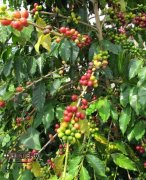
Basic knowledge of boutique coffee varieties of coffee trees
Coffee is a perennial evergreen shrub or small tree of Rubiaceae. It is a horticultural perennial cash crop with the characteristics of fast growth, high yield, high value and wide market. Wild coffee trees can grow to a height of 5 to 10 meters, but coffee trees planted on the manor are often cut to less than 2 meters in order to increase their fruit and facilitate harvesting. The opposite leaves of coffee trees are long oval.

The types of coffee beans are planted from planting to harvest-how coffee trees produce coffee beans
Professional coffee knowledge exchange more coffee bean information please follow the coffee workshop (Wechat official account cafe_style) this time we will introduce the whole process of coffee beans from planting to picking, so that we can fully understand the process of coffee beans from scratch. The growth process of coffee the seedling stage is the period from the germination of seeds (or cuttings, grafting) to the emergence of seedlings (nursery nursery)

Coffee trees grow around the equator.
Coffee trees grow in tropical or subtropical agricultural gardens centered around the equator and called coffee belts. Most of the coffee production is between the Tropic of Cancer, 25 degrees north of the tropical or subtropical equator and 30 degrees south of the equator. An area with an annual average temperature of 16-25 degrees Celsius, no Frosts Descent and rainfall of 1600-2000 mm. At present, coffee is mainly produced by seven countries.

Planting conditions of Coffee trees
The origin of the coffee tree is Ethiopia in Africa. In botany, coffee trees belong to the evergreen trees of the subgenus Rubiaceae, and coffee beans, commonly known as coffee beans, are actually the seeds of the fruit of coffee trees. They are called coffee beans only because they are shaped like beans. Climate is the decisive factor for coffee cultivation. Coffee trees are only suitable for growing in the tropics or subtropics, so latitude 25 degrees south and north.
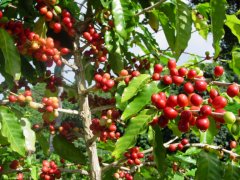
Coffee planting technology to share the growth process and planting conditions of coffee the life span of coffee trees is only …
Professional coffee knowledge exchange more coffee bean information please follow the coffee workshop (Wechat official account cafe_style) A coffee tree bears fruit several times a year. This time, we would like to introduce the whole process of coffee beans from planting to picking, so that we can fully understand the process of coffee beans from scratch. The growth process of coffee is from seeds (or cuttings, grafting) at the seedling stage.